Upcoming Webinars
Join us for the next retirement zoom webinar: Friday, October 2, 2026 10:00 AM - 2:15 PM EDT / 4 CEs
See information and register at:
https://webinars.htilearn.com/events/october-2-2026-letting-go-with-grace
Letting Go with Grace: The Hidden, Complex Psychology of Retirement
Guiding Clients—and Yourself—Through a Major Life Transition
This workshop prepares therapists to emotionally support their clients—and themselves—through one of adulthood’s most challenging yet overlooked life changes: a planned or unplanned retirement.
Participants in this workshop will gain the tools to recognize, understand, and work effectively with the psychological issues that emerge during this pivotal stage.
Retirement is a profound psychological and emotional shift—one that many professionals feel unprepared to face. Retirement anxiety has quietly become widespread in mid and later life, affecting high achievers, caregivers, creatives, and seasoned practitioners whose identities have been shaped by decades of meaningful work. For those in client-centered roles—therapists, physicians, attorneys, financial advisors—career endings carry added layers of relational attachment and responsibility. Drawing on expertise in anxiety, adult development, and the inner experience of life change, the presenters guide participants through the emotional landscape of retirement—grief, uncertainty, identity shifts, fear, and ultimately the emergence of a new normal infused with possibility and meaning.
This training also speaks directly to therapists approaching their own next chapter. A growing cohort of clinicians who have shaped the field for decades are now confronting the realities of stepping back from practice. Retiring from psychotherapy is unlike leaving most professions: it requires concluding meaningful therapeutic relationships, reshaping a long-held identity, and letting go of the intellectual and emotional rewards of clinical work.
Friday, October 2, 2026 10:00 AM - 2:15 PM EDT 4.0 CES / $129.00
Led by Lynn Grodzki and Margaret Wehrenberg
Self-Study Recorded 3 Hr Webinar, CEs availble

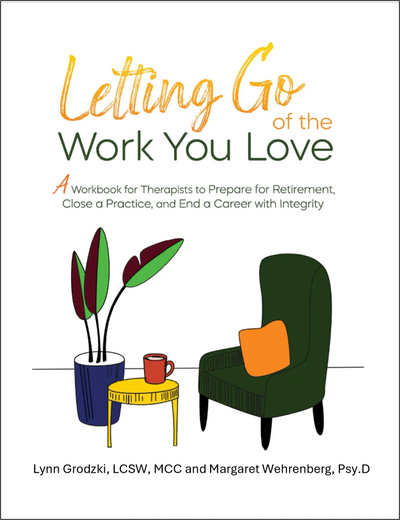
Letting Go of the Work You Love: How to Retire and Close Your Practice Without Abandoning Your Clients
Retirement isn’t as simple as walking away—it requires careful planning, precise timing, and transparent communication.
You may be asking yourself: When is the right time to close my practice? How can I prepare my clients for this inevitable transition? Will ending their therapy mid-process cause harm? And how do I cope with my own anxiety, guilt, and overwhelming concerns about letting go?
Whether your ending is planned or unplanned, therapists are bound by strict ethical codes that prohibit abandoning clients. For therapists in leadership roles—managing group practices, clinics, or agencies—the complexity deepens with the added responsibility of those they lead.
To close their caseloads, therapists must be prepared to navigate the full range of client emotions and understand the impact of loosening the vital attachment bonds that underpin successful therapy—both for themselves and their clients. This is a complex clinical challenge, requiring an advanced comprehension of the attachment issues that get triggered during a forced ending, and one that most therapists are unprepared for.
Until now, the clinical steps and skills for letting go of an entire caseload have been largely unexplored and rarely discussed. This unique workshop equips therapists with the knowledge, case examples, and support necessary to plan for the end of their work with compassion, care, and integrity.
Special offer from the publisher!
Wehrenberg, PsyD | Lynn Grodzki, LCSW, MCC
Duration:3 Hours
Format:Audio and Video
Copyright:Oct 10, 2025
Product Code:POS150334
Media Type:Digital Seminar
FROM PESI
The Art of Ending Well in Therapy: Ethical and Compassionate Case Closure with Lynn Grodzki, LCSW, MCC
Register here: https://leadingedgeseminars.org/event/ending-well-in-therapy/#1762892731193-588e3120-301e
Live Webinar with Lynn Grodzki | November 6, 2026 | 1:00pm - 4:15 pm ET / 3 CEs
How therapy ends is just as important as how it begins. Yet while clinicians receive extensive training in building rapport, assessing client needs, and guiding treatment, far less attention is given to one of the most clinically significant—and ethically sensitive—phases of care: ending treatment.
When termination is not handled thoughtfully, it can undermine therapeutic gains, intensify distress, create confusion, and expose clinicians to ethical risk. In contrast, a well-managed ending can consolidate progress, strengthen autonomy, and become a meaningful and transformative part of the therapeutic process.
Understanding Ethical Risks in Termination
This practical and clinically rich training explores the five major ethical concerns that can arise when endings are mishandled, including failure to terminate, premature termination, abandonment, boundary violations, and inadequate planning for continuity of care. Participants will gain clarity on how to determine when treatment has reached an appropriate conclusion and how to avoid the risks of ending too soon—or too late.
Live Webinar with Lynn Grodzki | November 6, 2026 | 1:00pm - 4:15 pm ET
